
← All success cases

Volkswagen reduces time to market with digital planning in Wandelbots NOVA
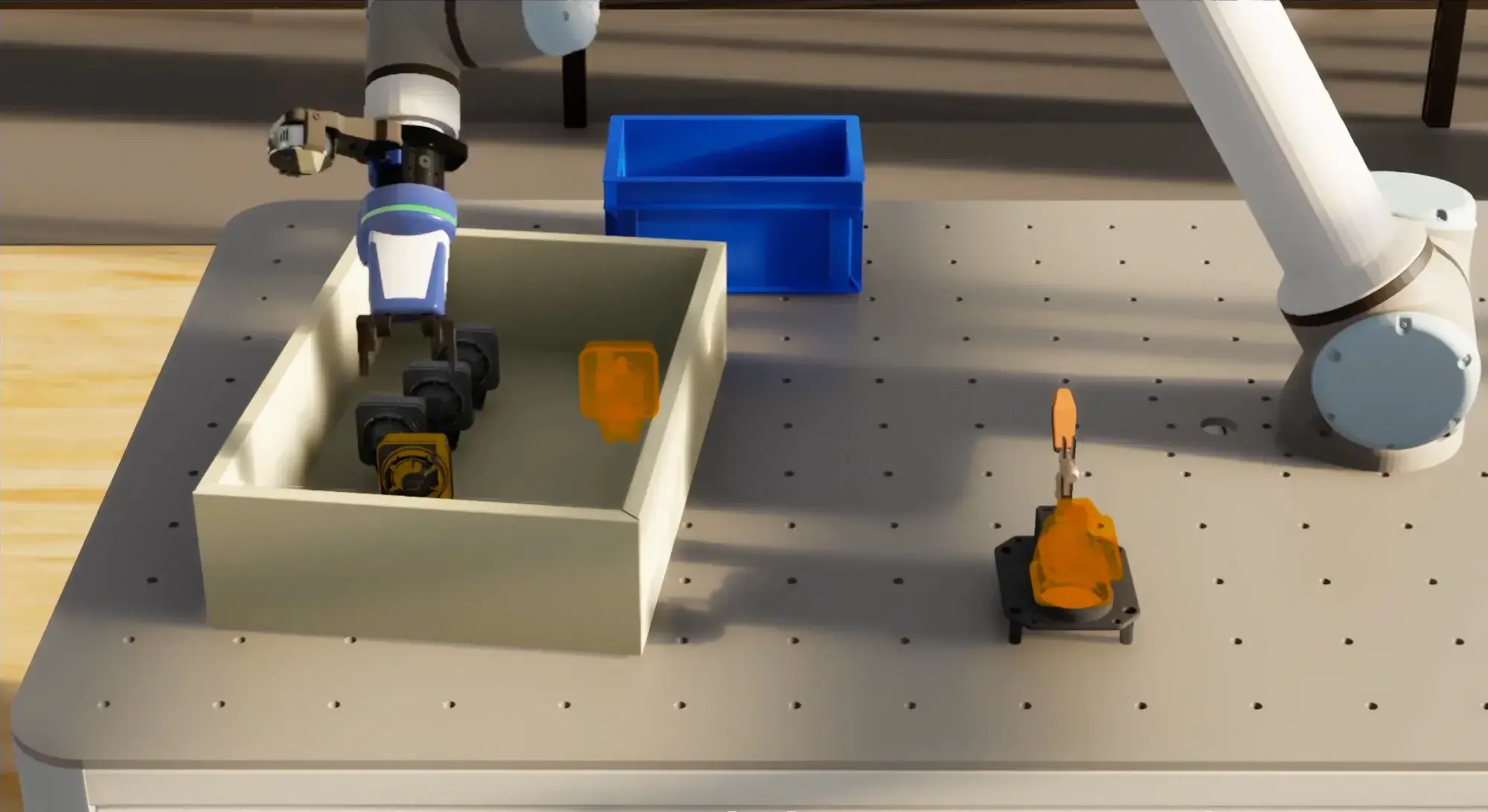
Volkswagen uses Wandelbots NOVA with NVIDIA Omniverse to plan and simulate a dynamic pick-and-place application before physical implementation. Vision data is translated into robot movement so teams can optimize the robot, tooling, peripherals, and path behavior earlier in the planning process.
Use Case Overview
Picking components from varying positions requires robots to adapt their movements dynamically. Developing these applications directly on physical equipment can be costly and time-consuming.Volkswagen uses Wandelbots NOVA and NVIDIA Omniverse to simulate a robotic horn assembly cell before physical deployment. A 3D vision system detects component positions, while NOVA generates the corresponding robot movements.By testing robots, tools, and configurations in a digital twin, Volkswagen can optimize its automation concept early and reduce the time and effort required for commissioning.
ABOUT
The Transparent Factory of Volkswagen Sachsen GmbH produces the VW ID.3 and serves as a Volkswagen Group site for testing innovative production solutions.
OBJECTIVE
Use physics-based virtual planning to build a digital twin for horn signal assembly and optimize cycle time before commissioning the physical automation cell.
SOLUTION
Wandelbots NOVA's NVIDIA Omniverse extension was used to create a digital twin of the horn assembly pick-and-place process, including robot, tool, vision system, and dynamic robot paths.
IMPACT
The ideal cell configuration was achieved during planning without hardware investment, and the virtual setup can be transferred closely to the physical cell to reduce time to market.
Challenges & process
Rising electric vehicle demand makes efficient manufacturing planning increasingly important. Volkswagen wanted to optimize horn assembly by validating robots, tools, and configurations virtually before investing in physical prototypes.
The application uses a mechanical gripper to pick signal horns from varying positions in a box. A 3D vision system detects part position and orientation, then passes that information into the NOVA robot program so the robot can pick and place each horn accurately.
For the virtual plan to shorten development cycles, the digital setup needs reliable continuity into the real robot cell. NOVA connects Omniverse Isaac Sim instances with robot planning workflows, allowing Volkswagen engineers to test and iterate processes in a physics-based environment before deployment.

“We hope that planning with NOVA in Omniverse will let us keep using today’s digital planning tools while reaching the digital construction site much earlier, giving us a time advantage and more mature planning validation.”
Head of New Mobility and Innovations, Volkswagen Sachsen GmbH
Impact & results
Volkswagen first planned the system virtually without hardware procurement. NOVA’s 3D robot and peripheral models helped the team identify a suitable cell configuration before physical implementation.
Robot paths and motions created in the Omniverse extension can be transferred into the physical deployment, improving product development efficiency and reducing the time between virtual planning and commissioning.



Ready to bring Wandelbots to your production line?
Talk to our team about how Wandelbots NOVA can help you scale robot automation faster.
Get in touch →