Master Complexity Before Deployment: Reimagining Battery Disassembly
Together with Fraunhofer IWU, EDAG and Grid Dynamics, Wandelbots elaborated the simulation and physical execution for a battery disassembly that uses vision, simulation, and adaptive robotics to identify, plan, and execute disassembly tasks on battery packs that vary in condition, geometry, and placement.

6613robot movements
coordinated across the application library
16tool configurations
operated by a single robot platform
233robot programms
planned before physical deployment
Use Case Overview
Battery disassembly is one of the most complex tasks to automate. Robots must perform numerous coordinated operations, from locating components and switching tools to cutting and unscrewing, while adapting to real-world conditions.
To address this challenge, the team developed and validated the entire workflow in simulation before deployment by combining machine vision, simulation, and software-defined automation.
The team created a battery disassembly cell capable of planning and executing complex disassembly processes with greater flexibility and adaptability.
Develops and deploys robot applications using NVIDIA technologies and Wandelbots NOVA. Builds, integrates, and commissions the physical solution for real-world operation.
Leads the research framework and helps define the capabilities required for future battery disassembly systems.
Provides the Physical AI infrastructure, enabling simulation, planning, execution, and adaptive robot operation.
Develops the vision system, including object segmentation, localization, camera calibration, and testing environments
The Objective
The objective is not to automate the disassembly of a single battery pack, but to investigate how future disassembly systems can handle complex robotic workflows across varying battery designs.
The project focuses on enabling robots to adapt their actions based on vision input and AI policies, rather than relying on fixed programming.
The Solution
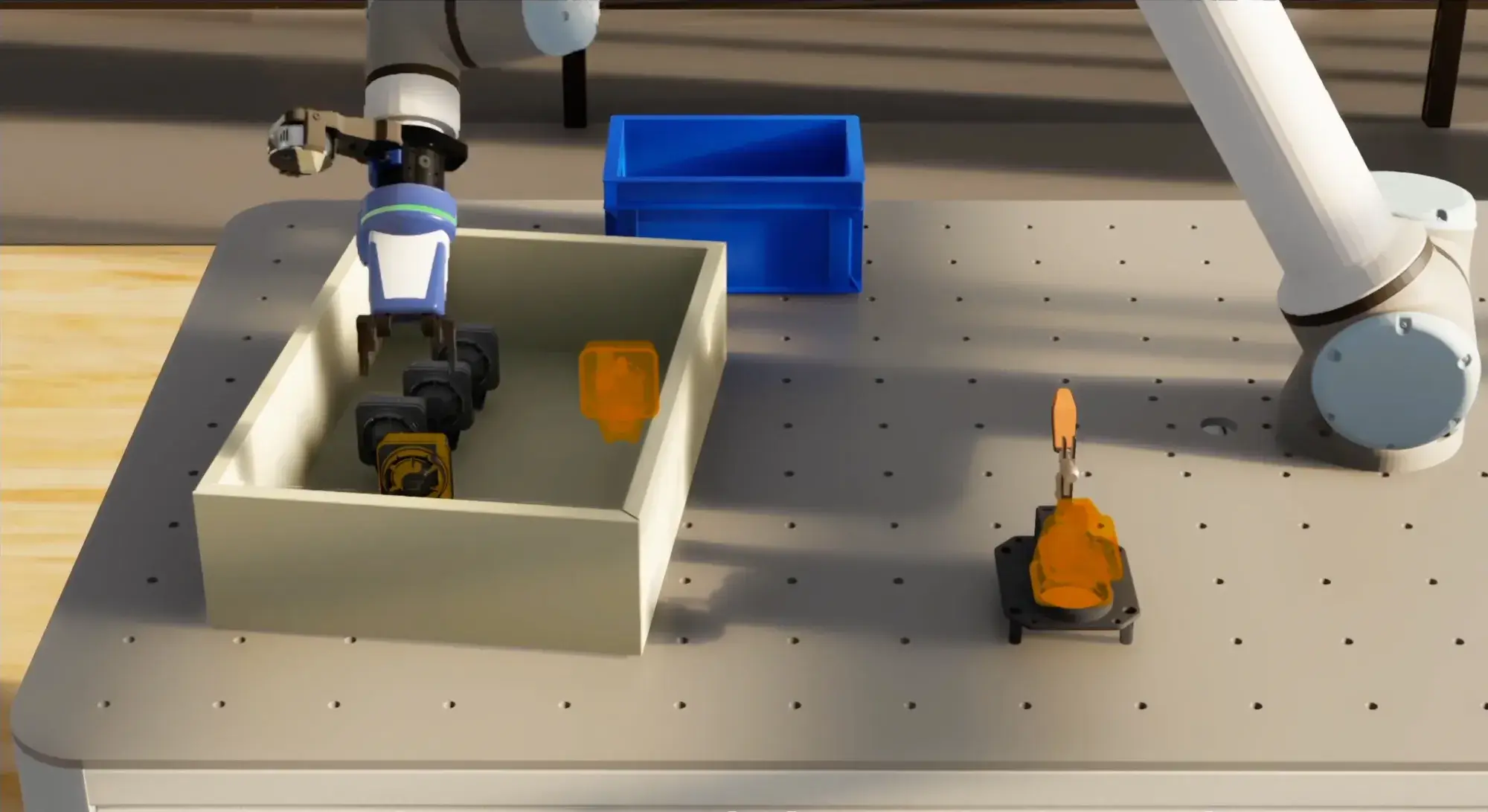
The team combined Wandelbots NOVA, NVIDIA Isaac Sim, machine vision, and adaptive motion planning to create an intelligent battery disassembly system.
The solution can locate components and perform key tasks such as lifting, cutting, and unscrewing. A single robot operates with 16 tool configurations and an 8-meter linear rail, enabling flexible operation across the work area.
The Impact
The project demonstrates a simulation-first workflow, with around two-thirds of development completed remotely. The same application logic runs in both simulation and on physical robots, accelerating development and deployment.
Challenges & process
Every battery pack is different, making disassembly a challenge that combines real-world variability with complex robot workflows.
To address this, the project uses vision, simulation, and adaptive motion planning to create a more flexible automation approach.
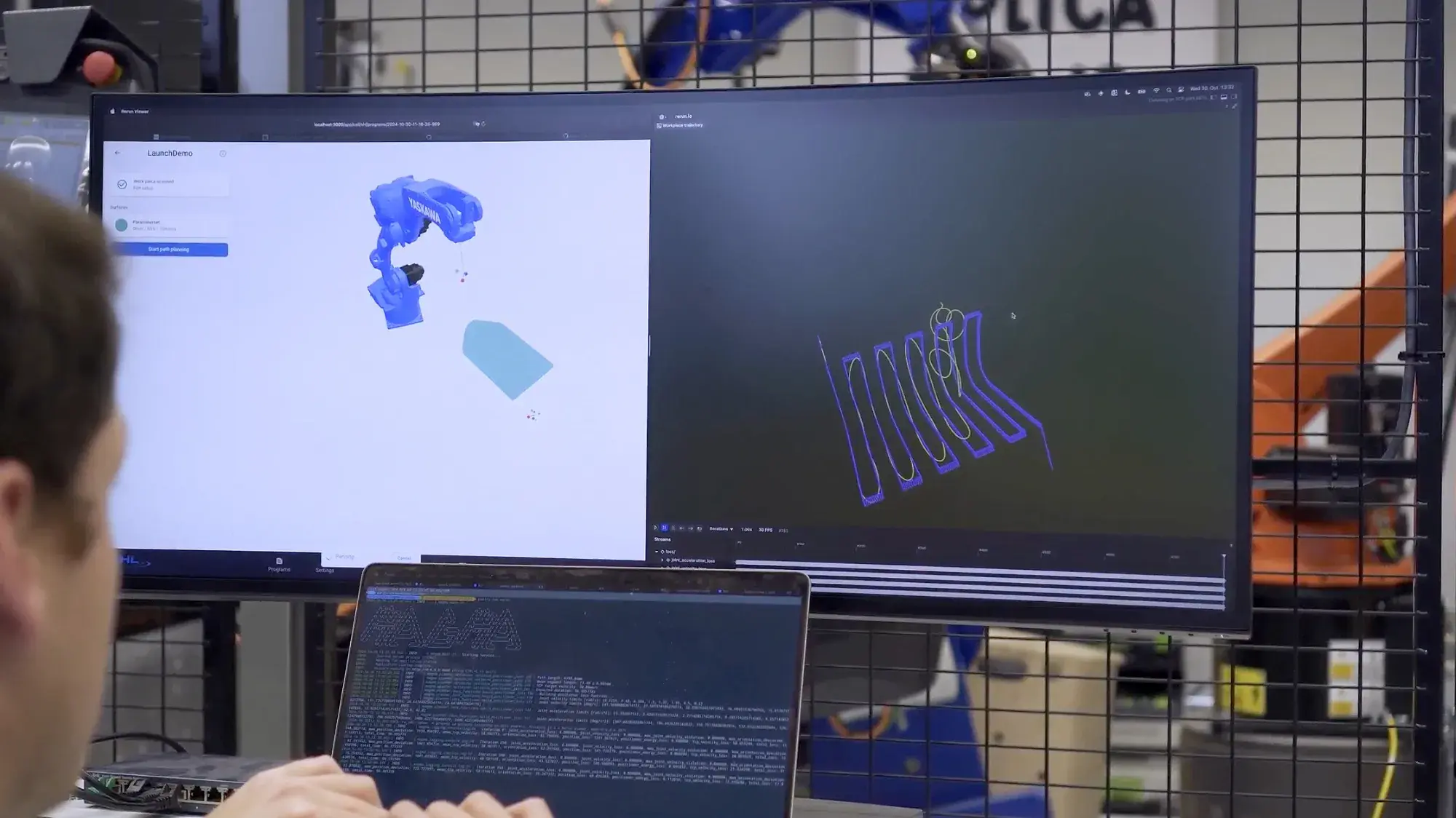
A simulation-first workflow allows robot programs and processes to be developed, tested, and validated before deployment on the physical cell.
Next Steps
The use case provides a blueprint for how complex robotic disassembly processes can be designed, simulated, and validated before deployment.
With the battery disassembly cell now built, the work moves into the next phase of real-world testing and evaluation. The objective of the project was not to demonstrate a production-ready outcome, but to investigate how vision systems, simulation, and software-defined automation can be combined to address the challenges of battery disassembly.
Explore the Full Story
Download the complete Success Story to learn how Fraunhofer IWU, EDAG, Grid Dynamics and Wandelbots combined vision, simulation, and adaptive robotics to advance battery disassembly automation
Ready to bring Wandelbots to your production line?
Talk to our team about how Wandelbots NOVA can help you scale robot automation faster.
Get in touch →